


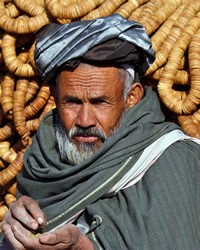

The Pashtun of Afghanistan and Pakistan have been called the largest Muslim tribal society in the world. They were the rulers of Afghanistan for over 250 years and still have much power through the Taliban. There are at least 30 major tribes, and countless sub-tribes and clans. Each clan can be friendly or hostile towards members of another particular clan, adding more divisions.
Pashtuns share a unique sense of common identity. Pashtun identity is based on four elements: Heritage (descent from a common ancestor); Islam, the Pashtunwali Code of Honor ("The Way of the Pashtun"); and to some extent, Language (Pakhtu or Pashto). Their common culture is what binds the Pashtun people together. More significant than dialectical differences, a Pashtun's primary loyalty is to his particular social group (tribe or sub-tribe).
However, different languages pose communication differences. Southern Pashto speakers live primarily in Afghanistan and Pakistan, though there is a significant Pashtun diaspora in the Arab Gulf and many Western countries. Those who speak the Southern Pashtun language live in a total of 13 countries including Sweden.
Southern Pashtun families typically arrive through asylum or family reunification channels and begin with temporary residence permits while navigating Sweden's migration system.
Family life is anchored by tight-knit communities, with elders often maintaining cultural traditions and kinship structures based on Pashtunwali values like honor and hospitality.
Children attend Swedish schools—two-thirds of Afghan-born adults have at most upper-secondary education, with only a minority achieving post-secondary credentials. This highlights the importance of education access and integration support.
Many face challenges such as discrimination in housing and employment but maintain strong transnational links with relatives in Afghanistan and other countries, supported by active Afghan associations like the Afghan Association in Sweden and city chapters (e.g., in Stockholm, Örebro, Malmö).
Cultural preservation is significant. Pashto-language learning, cultural events, and festivals are organized through associations such as Afghanska Föreningen (Stockholm, Örebro) and Ariana KIF in Malmö.
Sports clubs (e.g., Afghanska FC, Elastico FC) provide youth engagement via football and futsal. Young Southern Pashtuns also participate in community networks that advocate for Afghan rights and justice, though Sweden lacks large public Pashtun festivals; instead, cultural life is community-centered and grassroots. Recreational life is rooted in informal gatherings—tea sessions, family BBQs, storytelling, and celebrating Islamic festivals like Eid—upholding Pashtunwali customs of hospitality.
Southern Pashtuns are solidly Sunni Muslim. However, their devotion to Islam sometimes gets overshadowed by their belief in Pashtunwali, their tribal moral code.
Employment challenges are common. Afghan-born individuals often face high unemployment due to language barriers, credential recognition issues, and discrimination. To improve integration, many rely on Swedish for Immigrants (SFI) courses and municipal adult education programs, key for language and vocational training. Their lifestyle reflects both the strengths of community resilience and the challenges of immigrant integration in Sweden.
The greatest barriers to faith in Christ are social and cultural. Pashtuns almost always identify as Sunni Muslims. They will be married in a Sunni mosque, and to be associated with another religious system would be unacceptable in their community. Those who want to take Christ to the Pashtuns will need to do just that; take Christ to them, not a religious system. Since Jesus Christ personifies absolute holiness, those who face injustice and harsh lives might be drawn to him, if they had the chance to hear. Their code of honor, Pashtunwali, is also central to their belief system.
Pray for the production and distribution of all forms of media in the Pashto language, including literature, videos, music, movies, radio, websites, and social media.
Pray for accuracy in the Bible translations in progress.
Pray for more workers to serve the Southern Pashtun people—in education, business, healthcare, development and other professional areas.
Pray for God's Spirit to strengthen and protect new believers and to empower their lives and witness.
Pray for Pashtun religious and family leaders to have dreams of the only Savior, drawing them to truth and righteousness.
Scripture Prayers for the Pashtun, Southern in Sweden.
References
| Profile Source: Joshua Project |
| Other PDF Profile |


