


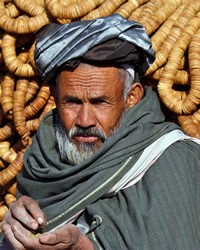

The Pashtun of Afghanistan and Pakistan have been called the largest Muslim tribal society in the world. They were the rulers of Afghanistan for over 250 years and still have much power through the Taliban. There are at least 30 major tribes, and countless sub-tribes and clans. Each clan can be friendly or hostile towards members of another particular clan, adding more divisions.
Pashtuns share a unique sense of common identity. Pashtun identity is based on four elements: Heritage (descent from a common ancestor); Islam, the Pashtunwali Code of Honor ("The Way of the Pashtun"); and to some extent, Language (Pakhtu or Pashto). Their common culture is what binds the Pashtun people together. More significant than dialectical differences, a Pashtun's primary loyalty is to his particular social group (tribe or sub-tribe).
However, different languages pose communication differences. Southern Pashto speakers live primarily in Afghanistan and Pakistan, though there is a significant Pashtun diaspora in the Arab Gulf and many Western countries. Those who speak the Southern Pashtun language live in a total of 13 countries including Germany.
Many Southern Pashtuns arrived post-2021 following the Taliban takeover and often lack German-recognized credentials, which leads to employment in low-skilled or entry-level jobs even for highly educated individuals.
Initiatives like the "Pathways to Joyful Integration" program provide mentorship and job market training, reducing job placement time from 5–7 years to approximately 2 years.
Strong transnational ties persist. Many maintain regular contact with relatives in Afghanistan or elsewhere, even while establishing new networks in Germany. Longer-term residents typically have more German and Afghan connections. The Pashtun experience in Germany is shaped by a balance of cultural identity maintenance and adaptation to a new societal context. They tend to build support networks centered on family, shared ethnicity, and advocacy platforms.
The Pashtun community meets through cultural events and informal gatherings, such as Pashtun Jirgas—forums where community issues, rights, and education are discussed—often amplified via social media.
The Pashtun Tahafuz Movement (PTM) has an active German chapter (notably in Berlin), organizing protests and advocacy events for Pashtun rights and justice.
Student vlogs and TikTok suggest that Pashtun students in cities like Bremen and Hamburg share experiences around cultural adaptation, cultural pride, and daily life, helping younger members connect and place value on their heritage.
While preservation of Pashtunwali values (hospitality, honor, communal decision-making) remains central, recreational activities are mostly informal and community-based—sharing traditional food, tea gatherings, music, and storytelling—rather than large public festivals.
Despite facing structural barriers like discrimination and legal insecurity, the community exhibits resilience through transnational connections, communal solidarity, and engagement in mentorship and civic initiatives.
Southern Pashtuns are solidly Sunni Muslim. However, their devotion to Islam sometimes gets overshadowed by their belief in Pashtunwali, their tribal moral code.
Common challenges include language barriers, unrecognized qualifications, and lengthy bureaucratic hurdles—which hinder entry into professional fields. Pashtun families often face legal uncertainty tied to asylum status, frequently holding temporary permits (e.g., Duldung) while awaiting decisions or facing deportation risks. Discrimination, particularly in housing, is reported—financially insecure families tend to feel more excluded and discriminated against. Family reunification, obtaining legal status, language acquisition, and stable housing rank among their top priorities.
The greatest barriers to faith are social and cultural. Pashtuns almost always identify as Sunni Muslims. They will be married in a Sunni mosque, and to be associated with another religious system would be unacceptable in their community. Those who want to take Christ to the Pashtuns will need to do just that; take Christ to them, not a religious system. Since Jesus Christ personifies absolute holiness, those who face injustice and harsh lives might be drawn to him, if they had the chance to hear. Their code of honor, Pashtunwali, is also central to their belief system.
Pray for the production and distribution of all forms of media in the Pashto language, including literature, videos, music, movies, radio, websites, and social media.
Pray for accuracy in the Bible translations in progress.
Pray for more workers to serve the Southern Pashtun people—in education, business, healthcare, development and other professional areas.
Pray for God's Spirit to strengthen and protect new believers and to empower their lives and witness.
Pray for Pashtun religious and family leaders to have dreams of the only Savior, drawing them to truth and righteousness.
Scripture Prayers for the Pashtun, Southern in Germany.
References
| Profile Source: Joshua Project |
| Other PDF Profile |


