Gbe, Ayizo in Benin
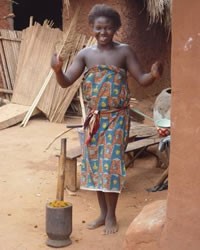
Photo Source:
Copyrighted © 2026
GoWestAfrica All rights reserved. Used with permission |
Send Joshua Project a map of this people group.
|
| People Name: | Gbe, Ayizo |
| Country: | Benin |
| 10/40 Window: | Yes |
| Population: | 591,000 |
| World Population: | 591,000 |
| Primary Language: | Gbe, Ayizo |
| Primary Religion: | Christianity |
| Christian Adherents: | 49.00 % |
| Evangelicals: | 7.00 % |
| Scripture: | Portions |
| Ministry Resources: | No |
| Jesus Film: | Yes |
| Audio Recordings: | Yes |
| People Cluster: | Guinean |
| Affinity Bloc: | Sub-Saharan Peoples |
| Progress Level: |

|
Introduction / History
The Ayizo Gbe people inhabit the southern coastal regions of Benin, primarily concentrated in the Atlantique Department with significant populations also in the Kouffo and Zou departments. Their language, Ayizo Gbe, belongs to the Gbe language family within the Niger-Congo linguistic continuum and is closely related to other regional languages such as Gbesi and Kotafon. The Ayizo have maintained their distinct ethnic and linguistic identity within the broader Gbe-speaking communities that stretch across West Africa. Their history is intertwined with the ancient kingdoms and migrations of the region, including connections to the historical Kingdom of Dahomey and the coastal city-states that characterized early West African civilization. The Ayizo language was first recorded in writing in a 1658 translation of the Doctrina Christiana, demonstrating their long engagement with literacy and the written word. Today, the Ayizo Gbe language remains the primary language of daily life within their communities, though French serves as the official language in educational and governmental contexts.
What Are Their Lives Like?
The Ayizo Gbe people depend significantly on agriculture and fishing as their primary means of livelihood, reflecting their location in a region rich in both fertile soil and aquatic resources. Many Ayizo families engage in subsistence farming, cultivating crops suited to their climate and geography while also maintaining small-scale fishing operations in the numerous rivers, lagoons, and coastal waters surrounding their communities. The broader economic context of Benin, where much of the population depends on agricultural activities, shapes the daily realities of Ayizo families, many of whom live in rural areas with limited access to modern infrastructure and services. Education varies considerably within Ayizo communities, with French being taught in secondary schools but local languages such as Ayizo Gbe being used in primary education. Ayizo communities maintain strong family and kinship structures with important roles for elders and traditional leaders in community decision-making and dispute resolution. Many Ayizo settlements reflect adaptation to their environment, with communities situated near waterways and agricultural lands that sustain their traditional economic activities.
What Are Their Beliefs?
The Ayizo Gbe people practice religions centered on ethnoreligious beliefs deeply rooted in their ethnic and cultural identity. Traditional indigenous religious practices, including veneration of spirits and ancestor worship, remain significant among the Ayizo and reflect their historical spiritual worldview. Christianity has a strong presence within some Ayizo communities, with various Christian denominational groups present in the region. The religious landscape of the Ayizo reflects the broader southern Beninese context, where multiple spiritual traditions coexist, and individual Ayizo may engage with traditional practices alongside Christian teachings or other religious influences.
What Are Their Needs?
Poverty remains a significant challenge across rural Benin and affects many Ayizo communities, with limited economic opportunities and dependence on subsistence agriculture creating economic vulnerability. Access to quality education remains constrained in many Ayizo settlements, limiting opportunities for youth advancement and contributing to cycles of limited economic mobility. Healthcare services, including maternal and child health care, remain inadequate in many rural Ayizo areas, and waterborne illnesses pose ongoing health risks in communities dependent on lagoons and rivers. Infrastructure development is minimal in many Ayizo regions, creating barriers to market access, educational services, and healthcare facilities that would improve community wellbeing. Climate change increasingly threatens the agricultural and fishing activities upon which Ayizo livelihoods depend, with unpredictable weather patterns and changing water levels disrupting traditional economic patterns. Clean water and sanitation resources require improvement across many Ayizo communities to prevent disease and improve living conditions. Economic diversification and sustainable livelihood alternatives would strengthen community resilience and reduce vulnerability to environmental changes and resource scarcity.
Prayer Points
Pray that the Lord Jesus Christ would be revealed as the Savior and Redeemer to the Ayizo Gbe people, and that the Holy Spirit would work mightily to transform hearts.
Intercede for faithful workers—both Ayizo believers and missionaries from outside—who can share the gospel with clarity and compassion and plant churches that will grow deep roots in Ayizo communities. Ask God to raise up Ayizo leaders and pastors who understand their culture and can shepherd their people toward spiritual maturity and gospel witness.
Pray for improved educational opportunities for Ayizo children so that they might develop their God-given potential and encounter the truths of Scripture in their own language.
Intercede for adequate healthcare and maternal health services to reduce preventable deaths and suffering in Ayizo communities.